
3/30 | Monday
Three bills were signed into law by Gov. Polis on Monday. Of them the one with the most attention is SB26-011, which mandates internet companies, referred to as ‘covered platforms’ in the bill; adhere to criminal warrants and court orders within 24 hours.
Platforms covered: Are public or ‘semipublic’ websites, services, or applications that have “at least one million discrete monthly users”.
Exempt from the bill: Are online marketplaces, such as Amazon or walmart.com. Entertainment and news websites where the administrators control the site’s content. And employment services such as Indeed or Slack.
Gov. Polis’ office put out a press release alongside him signing SB26-011. “I am committed to protecting internet freedom and safeguarding our privacy while giving law enforcement what they need to keep everyone safe, and this new law does exactly that.” Gov. Polis states in the release.
The governor’s commitment reflects the goal of a different bill more so, HB26-1037. The house bill would ban officers of Colorado governments from purchasing personal consumer data without judicial oversight. It has not moved since February 25th.
(Read more about HB26-1037 at News by Flora.)
3/31 | Tuesday
The US Supreme Court struck down parts of a Colorado law titled “Minor Conversion Therapy Law” while deciding Chiles v Salazar Tuesday morning. The 2019 law bans health providers from practicing “conversion therapy” on minors.
In the case the petitioner Kaley Chiles argued that her talk therapy was being unfairly regulated because of the ban. While she does not consider her practice to be ‘conversion therapy’, according to her she was nonetheless ‘injured’ by the state-wide ban. Saying ultimately that it was protected by the First Amendment, for being speech-based and on the basis of religious adherence, for her patients.
In the 8-1 decision Justice Jackson was the sole dissenter. Saying “Chiles is not speaking in the ether; she is providing therapy to minors as a licensed healthcare professional”, in connection with the speech defense. The justice then cited the long reported harm of conversion therapy. Justice Jackson also points out “No one directly disputes that Colorado has the power to regulate the medical treatments that state-licensed professionals provide to patients.” Claiming the concurring justices “misread our precedent”.
In other news from Tuesday, HB26-1339 was signed into law by Gov. Polis. The bill amended the state holiday “Cesar Chavez Day”, making March 31st in Colorado “Farm Workers Day”. The bill went into effect following the governor’s signature.
In Denver the company Axon replaced the recently lapsed Flock surveillance contract on Tuesday. For now, the city council has approved Axon’s partnership with the Denver Police Department for one year. It also reduced the number of cameras bringing the number down from Flock’s 100, to Axon’s 50 cameras.
(Read more at 9News.)
4/1 | Wednesday
The US Supreme Court began hearing oral arguments in Trump v. Barbara on Wednesday morning, where the president was in attendance. If the majority concurs with the president. There could be major ramification to upcoming elections, as well as how citizenship is determined in the United States for the purpose of services and constitutional rights. However, the ‘moderate’ justices did not seem swayed by President Trump’s legal arguments.
While asking for clarity on who the administration believed a US citizen to be Justice Thomas said. “The citizenship clause refers not just to national citizenship but also to state citizenship.”
Solicitor general John Sauer who was there representing the president responded, saying in part” Allegiance is what the word jurisdiction means, it does not mean regulatory jurisdiction.” That is according to their perspection of the Fourteenth Amendment’s ‘non-public’ context.
Explaining how ‘reside’ was different from citizenship, they argued ‘allegiance’ to the US government is required. “The very text itself presupposes that the citizen is domicile in the United States if they’re present in the state at all. They reside there. Reside means domicile in the constitution and we think that strongly supports our interpretation.”
Chief Justice Roberts responded to the solicitor general, saying, “The examples you give strike me as quirky” before elaborating, possibly signaling his dissent.
The case Trump v Barbara stems from an executive order made in the second day of Trump’s second presidency. The case is ongoing.
For context – The Fourteenth Amendment, Section 1
“All persons born or naturalized in the United States, and subject to the jurisdiction thereof, are citizens of the United States and of the State wherein they reside. No State shall make or enforce any law which shall abridge the privileges or immunities of citizens of the United States; nor shall any State deprive any person of life, liberty, or property, without due process of law; nor deny to any person within its jurisdiction the equal protection of the laws.“
4/2 | Thursday
Following the US Supreme Court deciding Chiles v Salazar on Tuesday, a special reading for a related bill took place in the Colorado House of Representatives Thursday afternoon.
The bill titled “Civil Actions for Conversion Therapy Survivors” or HB26-1322 passed the house on Thursday. It is now under consideration by the senate.
Rep. McCormick, who sponsored the bill said on Thursday “It is really important that we understand people are born who they are, and that there are quite a few hundreds of years of societal pressures that start on them from an early age, to try to fit into some kind of box. And I do believe that people are beautiful the way they are.”
HB26-1322 creates a standard set of civil actions for survivors of “conversion therapy”. Covering cases where an entity or person attempts to change the gender expression, gender identity or sexual orientation of another individual. If passed the law would provide a method for ‘survivors’ to seek damages if they feel they were subject to mistreatment.
4/3 | Friday
Colorado Attorney General Phil Weiser joined a lawsuit against the Trump administration on Friday alongside 22 other states and Washington DC.
In the collective lawsuit the state attorneys claim the administration is overstepping and leveraging the federal office to interfere in the election process. The suit is a result of President Trump signing an executive order on Tuesday to ‘nationalize’ federal elections, by creating a federally approved list of residents the administration deems ‘eligable to vote’ and ordering that USPS follow it when delivering mail ballots, or not.
The states, including Colorado argue that the executive order is contrary to the constitutions separations of power. Which says that elections, and its functions are the responsibility of each state, not the federal government.
In his own press release following the filing of the lawsuit Attorney general Weiser said about it, “The president does not have the power to takeover elections by signing an executive order. The Constitution is clear that the states determine the time, place and manner of elections.” A direct reference to Article I, Section 4, Clause 1 of the US Constitution.
Bills Signed into Colorado law
| Date of Polis Signature | Bill Number | Prime Sponsors | Final Act or Bill Title | Effective Date Subject to change/petition | Colorado Statute Amendments |
| 3/30 Monday | SB26-007 | Sen. K. Mullica Rep. L. Feret Rep. S. Lieder | Medical Marijuana Use in Health Facilities. “Ryan’s Law” | August 12, 2026 | Changes 12-1.5-106.1 |
| 3/30 Monday | SB26-011 | Sen. L. Frizell Sen. D. Roberts Rep. A. Boesenecker Rep. J. Caldwell | Search Warrants Provided to Covered Platforms | August 12, 2026 | Changes 16-3-313 |
| 3/30 Monday | SB26-016 | Sen. L. Cutter Sen. K. Wallace Rep. L. Smith Rep. M. Lukens | Plastic Pellet-Free Waters Act | August 12, 2026 | Adds part 11 to Title 25, Article 8. Changes 25-8-501 and 25-8-329 |
| 3/31 Tuesday | HB26-1339 | Rep. M. Duran Rep. L. Garcia Sen. J. Danielson Sen. L. Cutter | Farm Workers Day | March 31, 2026 | Changes 24-11-1112 |
| 4/2 Thursday | HB26-1017 | Sen. C. Espenoza Rep. Y. Zokaie Sen. M. Weissman | Criminal Restitution Prohibited for Insurers | August 12, 2026 | Adds 18-1.3-601(1)(h) Changes 18-1.3-602 (3)(a), (3)(d), (4)(a)(III), and (4)(a)(VI) 18-1.3-603(8) and adds (12), (13) |
| 4/2 Thursday | HB26-1042 | Rep. L. Feret Rep. B. Bradley Sen. M. Ball | Dry Needling by Occupational Therapists | August 12, 2026 | Adds 12-270-109.5 |
| 4/2 Thursday | HB26-1146 | Rep. J. Phillips Rep. E. Hamrick Sen. C. Kolker Sen. C. Kipp | Allow Approved Facility Schools Participation in Public Employees’ Retirement Association | August 12, 2026 | Changes 24-51-101(20) and adds (5.5) 24-51-309 24-51-313(1) |
| 4/2 Thursday | SB26-037 | Sen. J. Rich Sen. D. Roberts Rep. M. Soper Rep. C. Espenoza | Allowing Local Elected Judicial Officers to Set Weekend Bonds | April 2nd, 2026 | Adds 13-2-101(18) |
Search bill number at leg.colorado.gov/bills for more information.
###
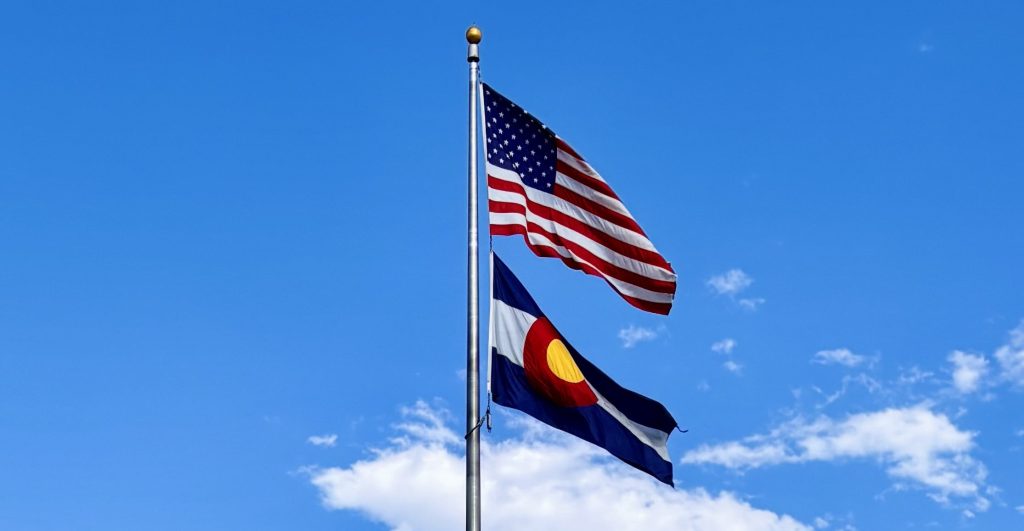
Feature Image by Florence Alden. October 2025.
 News by Flora
Leave a Reply